Senegal advances discussions on the National Qualifications Framework and Recognition of Prior Learning with ACQF support
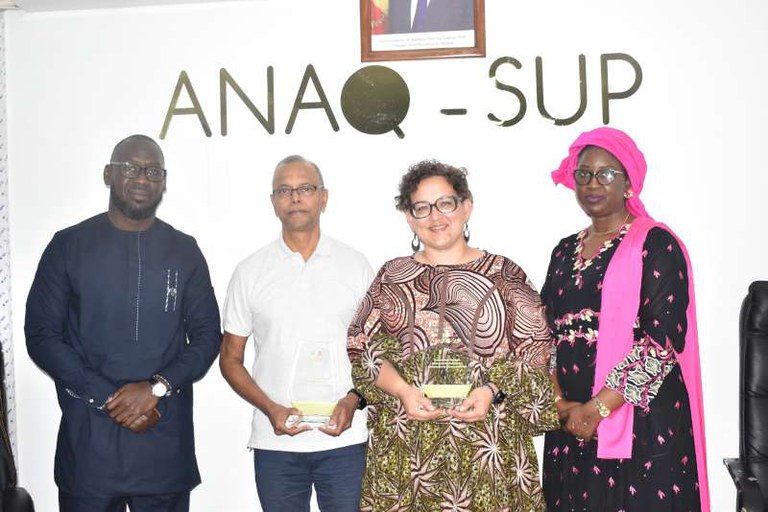
 The mission was carried out by Satu Järvinen and Robin Phoolchund on behalf of ETF and focused on ongoing work related to the development of Senegal’s National Qualifications Framework (NQF/CNQ) and the exploration of Recognition of Prior Learning (RPL) approaches adapted to the Senegalese context.
During the mission, the ETF team met with the Minister of Higher Education, Research and Innovation, Professor Daouda Ngom, as well as representatives of ANAQ-Sup led by the Executive Secretary, Professor Massamba Diouf, and the technical team coordinated by Massamba Sall Seck. Discussions also involved representatives from the Direction Générale de l’Enseignement Supérieur (DGES), ISEP institutions, les Chambres des Métiers and other actors involved in certification and competence recognition processes.
The discussions focused on governance and implementation questions related to the National Qualifications Framework, including learning outcomes approaches, modular qualifications, quality assurance and links between qualifications systems and labour market needs. Particular attention was given to the recognition of competences acquired outside formal education systems and the importance of developing more flexible and inclusive pathways for skills recognition.
A major part of the mission focused on Recognition of Prior Learning (RPL). Workshops and technical working sessions explored how RPL approaches could support lifelong learning, employability and recognition of competences acquired through work experience and informal learning.
Participants also reflected on existing Senegalese experiences related to RPL, including legal provisions concerning ISEP institutions and initiatives linked to certification of literacy facilitators. Discussions highlighted the importance of practical and authentic assessment methods adapted to the realities of the Senegalese context, particularly in relation to the informal sector.
The mission further explored the possible development of an RPL pilot project coordinated by ANAQ-Sup in collaboration with national and international partners. Discussions highlighted the importance of testing methodologies, governance arrangements, assessment approaches and operational tools before broader implementation.
The mission demonstrated strong institutional interest in continuing work related to qualifications reform and Recognition of Prior Learning in Senegal. It also highlighted the importance of continued technical reflection, coordination and operational preparation in order to support future implementation.