ACQF showcases its tools for trusted and portable skills at Africa Skills Week 2026
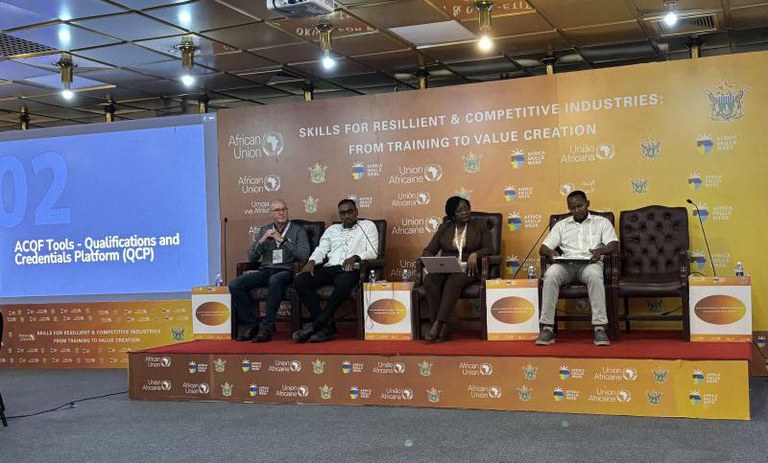
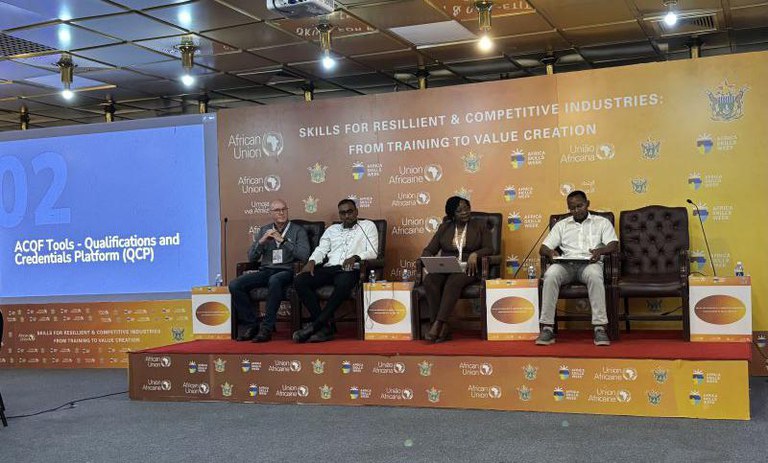
Speakers included Dr Winnie Bulimo and Haron Chege of the Kenya National Qualifications Authority (KNQA), Denver Gounden of DGC TalentWorks, Dr Sean Jones of the Artisan Training Institute, and the European Training Foundation (ETF) ACQF-II team of Maria Rosenstock (moderator) and Anatolii Garmash.
From referencing to visible qualifications
KNQA, which is one of the three presiding bodies of the ACQF Network, shared its experience of referencing the Kenya National Qualifications Framework to the ACQF. Referencing is a structured, evidence-based and peer-reviewed process that results in a national report showing how a country’s framework relates to the ACQF. Once published, the ACQF level can be displayed alongside the national level, making it visible to learners, employers and authorities. It does not guarantee automatic recognition but builds the trust on which recognition decisions rest.
These levels can also be seen on the QCP, which was presented through a walkthrough using Kenyan qualifications. The continental, multilingual platform lets users search, compare and explore qualifications across countries.
Industry and the way ahead
Industry and training provider perspectives examined what happens when workers must be trained, certified and deployed across borders, including where national qualifications and accreditation arrangements are still emerging. Common occupational profiles, which define shared competence requirements across countries, are being developed in agriculture (coordinated by Kenya), mining (Zambia) and green hydrogen and renewable energy (Namibia).
The joint discussion then turned to priorities for the way forward, as operationalisation work supported by the ACQF-II project is handed over to the ACQF Network:
- stronger national systems, with operational NQFs, clear procedures and quality assurance;
- qualifications transparency, through referencing and visibility on the QCP;
- common occupational profiles agreed with countries and industry;
- multi-country approaches to certification, such as joint quality assurance or recognition of industry certification.
Participants were also invited to propose further priorities, including what the ACQF Network can do on its own and what requires national or regional agreements. Strengthening national systems and connecting them through shared tools will support trust and mobility of skills across Africa.